1. Introduction
Plant derived phytochemicals remain of strong interest for food and health related applications because they can deliver antioxidant functionality when efficiently recovered from plant matrices
| [1] | Zhang Y-J, Gan R-Y, Li S, Zhou Y, Li A-N, Xu D-P, et al., Antioxidant Phytochemicals for the Prevention and Treatment of Chronic Diseases. Molecules, 2015. 20(12): 21138-21156. https://doi.org/10.3390/molecules201219753 |
[1]
. This interest also reflects the push to valorize underutilized botanical resources and agro-derived materials as sources of natural bioactives
. In food systems, antioxidant extracts are valuable because they can slow oxidation that damages color, flavor, and nutritional quality, and they can extend shelf life while meeting demand for plant based and clean label ingredients
| [3] | Petcu CD, Tăpăloagă D, Mihai OD, Gheorghe-Irimia R-A, Negoiță C, Georgescu IM, et al., Harnessing Natural Antioxidants for Enhancing Food Shelf Life: Exploring Sources and Applications in the Food Industry. Foods, 2023. 12(17): 3176. https://doi.org/10.3390/foods12173176 |
[3]
. Beyond food preservation, antioxidant rich plant extracts are increasingly sought as natural additives and value-added ingredients in food systems. Their practical use depends on efficient, food compatible extraction that preserves redox active compounds and supports reproducible functional performance
| [4] | A dithya BS, Nayeem M, Sagar NA, Kumar S. Therapeutic Potentials of Jamun (Syzygium cumini) and Its Integration Into Modern Food Technologies: A Review. International Journal of Food Science, 2025. 2025(1): 8197889.
https://doi.org/10.1155/ijfo/8197889 |
[4]
. To translate this potential into useable ingredients, extraction must be effective, food compatible, and amenable to scale up.
Syzygium cumini is a medicinal tree with broad ethnomedicinal documentation and a growing phytochemical evidence base
| [4] | A dithya BS, Nayeem M, Sagar NA, Kumar S. Therapeutic Potentials of Jamun (Syzygium cumini) and Its Integration Into Modern Food Technologies: A Review. International Journal of Food Science, 2025. 2025(1): 8197889.
https://doi.org/10.1155/ijfo/8197889 |
| [5] | Wali AF, Alam A. The Effect of Different Extraction Methods on Antioxidant Capacity and Phytochemical Screening of Syzygium cumini Seeds. Free Radicals and Antioxidants, 2019. 9(1): 48-51. https://doi.org/10.5530/fra.2019.1.9 |
[4, 5]
. Available studies indicate that the species contains diverse secondary metabolites, including phenolics and flavonoids, together with other classes such as triterpenes and saponins
| [4] | A dithya BS, Nayeem M, Sagar NA, Kumar S. Therapeutic Potentials of Jamun (Syzygium cumini) and Its Integration Into Modern Food Technologies: A Review. International Journal of Food Science, 2025. 2025(1): 8197889.
https://doi.org/10.1155/ijfo/8197889 |
| [5] | Wali AF, Alam A. The Effect of Different Extraction Methods on Antioxidant Capacity and Phytochemical Screening of Syzygium cumini Seeds. Free Radicals and Antioxidants, 2019. 9(1): 48-51. https://doi.org/10.5530/fra.2019.1.9 |
| [6] | Silva CC, Gomes CL, Danda LJ, Roberto AEM, Carvalho AMRD, Ximenes EC, et al., Optimized microwave-assisted extraction of polyphenols and tannins from Syzygium cumini (L.) Skeels leaves through an experimental design coupled to a desirability approach. Anais da Academia Brasileira de Ciências, 2021. 93(2): e20190632.
https://doi.org/10.1590/0001-3765202120190632 |
| [7] | Rana GMM, Uddin MJ, Islam MT, Barmon J, Dey SS, Chandra Ghos B, et al., Solvent-free microwave extraction and hydrodistillation extraction of essential oils from Syzygium cumini leaves: Comparative analysis of chemical constituents, in vitro and in silico approaches. LWT, 2025. 228: 118074. https://doi.org/10.1016/j.lwt.2025.118074 |
[4-7]
. Extracts and isolated compounds have been reported to show antioxidant activity
in vitro | [4] | A dithya BS, Nayeem M, Sagar NA, Kumar S. Therapeutic Potentials of Jamun (Syzygium cumini) and Its Integration Into Modern Food Technologies: A Review. International Journal of Food Science, 2025. 2025(1): 8197889.
https://doi.org/10.1155/ijfo/8197889 |
| [5] | Wali AF, Alam A. The Effect of Different Extraction Methods on Antioxidant Capacity and Phytochemical Screening of Syzygium cumini Seeds. Free Radicals and Antioxidants, 2019. 9(1): 48-51. https://doi.org/10.5530/fra.2019.1.9 |
| [7] | Rana GMM, Uddin MJ, Islam MT, Barmon J, Dey SS, Chandra Ghos B, et al., Solvent-free microwave extraction and hydrodistillation extraction of essential oils from Syzygium cumini leaves: Comparative analysis of chemical constituents, in vitro and in silico approaches. LWT, 2025. 228: 118074. https://doi.org/10.1016/j.lwt.2025.118074 |
[4, 5, 7]
. These attributes support the view that
Syzygium cumini could serve as a source of multifunctional phytochemicals for antioxidant enriched ingredients, provided that extraction is engineered to maximize recovery while preserving redox activity.
Extraction is the key bottleneck that connects botanical composition to ingredient performance
| [8] | Melikoglu M. Microwave-assisted extraction: Recent advances in optimization, synergistic approaches, and applications for green chemistry. Sustainable Chemistry for Climate Action, 2025. 7: 100122. https://doi.org/10.1016/j.scca.2025.100122 |
[8]
. Conventional solid liquid extraction is simple, but it is often slow and yield limited because mass transfer is constrained by cell wall barriers and diffusion resistance
| [9] | Priego-Capote F. 6 - Solid–liquid extraction techniques. In: Lucena R, Cárdenas S, editors. Analytical Sample Preparation With Nano- and Other High-Performance Materials: Elsevier; 2021. p. 111-30. https://doi.org/10.1016/B978-0-12-822139-6.00002-X |
[9]
. Water based extraction is attractive for food applications because it is inherently food grade and avoids organic solvents
| [10] | Tchabo W, Ma Y, Kwaw E, Xiao L, Wu M, Maurice AT. Impact of extraction parameters and their optimization on the nutraceuticals and antioxidant properties of aqueous extract mulberry leaf. Int J Food Prop, 2018. 21(1): 717-732.
https://doi.org/10.1080/10942912.2018.1446025 |
[10]
. Yet aqueous systems can be less efficient for some phenolic subclasses, and uncontrolled heating can degrade thermolabile compounds
. This is particularly important when extracts are intended to deliver consistent functional performance, including antioxidant capacity measured by
in vitro assays. Process intensification is therefore needed to obtain reproducible, activity rich extracts under aqueous conditions.
Microwave-assisted aqueous extraction (MAAE) is a promising intensification strategy. Microwave heating is rapid and volumetric, which can accelerate diffusion, improve solvent penetration, and promote structural disruption of plant tissues
| [8] | Melikoglu M. Microwave-assisted extraction: Recent advances in optimization, synergistic approaches, and applications for green chemistry. Sustainable Chemistry for Climate Action, 2025. 7: 100122. https://doi.org/10.1016/j.scca.2025.100122 |
| [12] | Lee CS, Binner E, Winkworth-Smith C, John R, Gomes R, Robinson J. Enhancing natural product extraction and mass transfer using selective microwave heating. Chemical Engineering Science, 2016. 149: 97-103.
https://doi.org/10.1016/j.ces.2016.04.031 |
[8, 12]
. However, extraction performance depends strongly on process settings. Microwave power level (MP) controls the rate of energy input and heating intensity. Extraction time (ET) determines cumulative exposure and the extent of solute release
| [13] | Wang N, Zhu H, Wang M, Zhao S, Sun G, Li Z. Recent Advancements in Microwave-Assisted Extraction of Flavonoids: A Review. Food and Bioprocess Technology, 2025. 18(3): 2083-100. https://doi.org/10.1007/s11947-024-03574-y |
| [14] | Chan C-H, Lim J-J, Yusoff R, Ngoh G-C. A generalized energy-based kinetic model for microwave-assisted extraction of bioactive compounds from plants. Sep Purif Technol, 2015. 143: 152-160. https://doi.org/10.1016/j.seppur.2015.01.041 |
[13, 14]
. Particle size ratio (PS) governs surface area and diffusion distance, and it influences how uniformly the matrix heats and hydrates
| [13] | Wang N, Zhu H, Wang M, Zhao S, Sun G, Li Z. Recent Advancements in Microwave-Assisted Extraction of Flavonoids: A Review. Food and Bioprocess Technology, 2025. 18(3): 2083-100. https://doi.org/10.1007/s11947-024-03574-y |
| [14] | Chan C-H, Lim J-J, Yusoff R, Ngoh G-C. A generalized energy-based kinetic model for microwave-assisted extraction of bioactive compounds from plants. Sep Purif Technol, 2015. 143: 152-160. https://doi.org/10.1016/j.seppur.2015.01.041 |
[13, 14]
. These variables can interact, such that excessive power or prolonged exposure may compromise polyphenol integrity, while low intensity or coarse particles can limit release and antioxidant performance
| [14] | Chan C-H, Lim J-J, Yusoff R, Ngoh G-C. A generalized energy-based kinetic model for microwave-assisted extraction of bioactive compounds from plants. Sep Purif Technol, 2015. 143: 152-160. https://doi.org/10.1016/j.seppur.2015.01.041 |
[14]
. A robust optimization approach is therefore required to maximize both phytochemical recovery and antioxidant activity. Recent reports
| [8] | Melikoglu M. Microwave-assisted extraction: Recent advances in optimization, synergistic approaches, and applications for green chemistry. Sustainable Chemistry for Climate Action, 2025. 7: 100122. https://doi.org/10.1016/j.scca.2025.100122 |
| [13] | Wang N, Zhu H, Wang M, Zhao S, Sun G, Li Z. Recent Advancements in Microwave-Assisted Extraction of Flavonoids: A Review. Food and Bioprocess Technology, 2025. 18(3): 2083-100. https://doi.org/10.1007/s11947-024-03574-y |
[8, 13]
summarize that MAE performance is governed by coupled effects of energy delivery, solvent system, and matrix properties, and they stress the need for statistically designed optimization rather than one-factor testing.
Microwave-based extraction has been explored for
Syzygium cumini, but most reports
| [6] | Silva CC, Gomes CL, Danda LJ, Roberto AEM, Carvalho AMRD, Ximenes EC, et al., Optimized microwave-assisted extraction of polyphenols and tannins from Syzygium cumini (L.) Skeels leaves through an experimental design coupled to a desirability approach. Anais da Academia Brasileira de Ciências, 2021. 93(2): e20190632.
https://doi.org/10.1590/0001-3765202120190632 |
| [7] | Rana GMM, Uddin MJ, Islam MT, Barmon J, Dey SS, Chandra Ghos B, et al., Solvent-free microwave extraction and hydrodistillation extraction of essential oils from Syzygium cumini leaves: Comparative analysis of chemical constituents, in vitro and in silico approaches. LWT, 2025. 228: 118074. https://doi.org/10.1016/j.lwt.2025.118074 |
[6, 7]
do not provide design rules for a strictly aqueous, food-grade process. Solvent systems and targets vary across studies
| [5] | Wali AF, Alam A. The Effect of Different Extraction Methods on Antioxidant Capacity and Phytochemical Screening of Syzygium cumini Seeds. Free Radicals and Antioxidants, 2019. 9(1): 48-51. https://doi.org/10.5530/fra.2019.1.9 |
| [6] | Silva CC, Gomes CL, Danda LJ, Roberto AEM, Carvalho AMRD, Ximenes EC, et al., Optimized microwave-assisted extraction of polyphenols and tannins from Syzygium cumini (L.) Skeels leaves through an experimental design coupled to a desirability approach. Anais da Academia Brasileira de Ciências, 2021. 93(2): e20190632.
https://doi.org/10.1590/0001-3765202120190632 |
| [7] | Rana GMM, Uddin MJ, Islam MT, Barmon J, Dey SS, Chandra Ghos B, et al., Solvent-free microwave extraction and hydrodistillation extraction of essential oils from Syzygium cumini leaves: Comparative analysis of chemical constituents, in vitro and in silico approaches. LWT, 2025. 228: 118074. https://doi.org/10.1016/j.lwt.2025.118074 |
[5-7]
and particle size effects are often not reported, which limits transferability and scale-up. This leaves an engineering gap for a controlled MAAE optimization that quantifies the combined effects of microwave power, extraction time, and particle size on phytochemical indices and antioxidant activity.
Response surface methodology (RSM) provides a statistically grounded route to model and optimize such multivariable processes
. It captures main effects, curvature, and interactions while reducing experimental effort compared with one factor at a time testing
. Accordingly, this study applies RSM to optimize MAAE of phytochemicals from
Syzygium cumini powder, with MP, ET, and PS as the key process variables. Process performance was evaluated using total phenolic content (TPC), total flavonoid content (TFC), and total tannin content (TTC), alongside antioxidant activity measured by the 1,1 diphenyl 2 picrylhydrazyl (DPPH) and 2,2 azino bis (3 ethylbenzothiazoline 6 sulfonic acid) (ABTS) assays as
in vitro chemical screening metrics of extract redox capacity. By linking MP, ET, and PS to phytochemical recovery and antioxidant activity, this study sought to define an optimized, food compatible MAAE window. The work supports ingredient-oriented valorization of
Syzygium cumini leaves for food formulation and oxidative stability applications.
2. Materials and Methods
2.1. Materials
Fresh leaves of Syzygium cumini were collected in Ngaoundere, Adamawa Region, Cameroon. Botanical identification was confirmed by a taxonomist at the Botanical Survey, Department of Science, University of Ngaoundere. The leaves were dried at 40°C for 24 h in a forced convection oven (UF110, Memmert GmbH, Schwabach, Germany) and then milled using a hammer mill (FitzMill L1A, Fitzpatrick, Waterloo, ON, Canada). The resulting powder was separated into particle size fractions by sieving through stainless steel sieves with nominal apertures of 100, 250, and 400 µm using a mechanical sieve shaker (BK-TS200, Biobase, Jinan, China). Each fraction was packed in airtight polyethylene bags and stored at room temperature until extraction. All analytical grade reagents and chemicals were purchased from Sinopharm Chemical Reagent Co., Ltd. (China).
2.2. Microwave-Assisted Aqueous Extraction
MAAE was conducted using a domestic microwave unit (H30MOMS9HG, Hisense, Qingdao, China). The powder fractions specified in the experimental design were combined with distilled water at a 1:20 (w/v) solid to liquid ratio. Irradiation was applied at the design selected power levels and exposure times, using a pulsed sequence of 5 s on and 15 s off to minimize boiling
| [16] | Kishimoto N. Microwave-assisted extraction of phenolic compounds from olive by-products. Chemical Engineering Transactions, 2022. 91: 613-618. https://doi.org/10.3303/CET2291103 |
[16]
. The treated mixtures were centrifuged (BKC-TH21, Biobase, Jinan, China) for 15 min at 8000 rpm and then filtered. The resulting extracts were stored at −29°C until analysis.
2.3. Experimental Design
RSM was applied to quantify the effects of key aqueous extraction variables on phytochemical recovery and antioxidant capacity of
Syzygium cumini leaf powder. A three level, three factor Box Behnken design (BBD) was used to identify operating conditions that maximize compositional responses and antioxidant performance. The independent variables were MP, ET, and PS, denoted as
,
, and
, respectively. Factor levels were selected from preliminary trials and are reported in
Table 1.
Table 1.
Coded and actual factor levels for the Box Behnken design. Coded and actual factor levels for the Box Behnken design. Coded and actual factor levels for the Box Behnken design. Independent variables | Symbols | Coded levels |
| -1 | 0 | 1 |
MP | | 360 | 630 | 900 |
ET | | 8 | 14 | 20 |
PS | | 100 | 300 | 500 |
MP -Microwave power (W), ET-Extraction time (min), and PS-Particle size (µm)
The independent variables were transformed into coded values using the following equation:
Where represents the coded value of factor i, is the corresponding actual value, denotes the centre point, and is the increment between coded levels 0 and 1.
The responses included phytochemical indices TPC, TFC and TTC, together with antioxidant capacity evaluated by DPPH, and ABTS assays. The experimental data were subjected to multiple regression analysis and fitted to a second order polynomial model.
(2)
Where Y is the predicted response, is the intercept, are the linear coefficients, are the quadratic coefficients, and are the interaction coefficients, with and representing the independent variables.
2.4. Analytical Methods
2.4.1. Total Phenolic Content Determination
TPC was determined according to Tchabo, Ma
| [17] | Tchabo W, Ma Y, Engmann FN, Zhang H. Ultrasound-assisted enzymatic extraction (UAEE) of phytochemical compounds from mulberry (Morus nigra) must and optimization study using response surface methodology. Industrial Crops and Products, 2015. 63: 214-225.
https://doi.org/10.1016/j.indcrop.2014.09.053 |
[17]
using a Folin Ciocalteu colorimetric procedure with minor adjustments. A 0.1 ml aliquot of the filtered supernatant was mixed with 7.9 ml deionized water and 0.5 ml Folin Ciocalteu reagent. After 1 to 8 min, 1.5 ml sodium carbonate solution (20 % w/v) was added, and the mixture was incubated in a water bath at 40 ± 2°C for 30 min. Absorbance was measured at 765 nm. TPC was expressed as mg gallic acid equivalents per g of dry solids.
2.4.2. Total Flavonoid Content Determination
TFC was determined using the aluminium chloride colorimetric assay
| [17] | Tchabo W, Ma Y, Engmann FN, Zhang H. Ultrasound-assisted enzymatic extraction (UAEE) of phytochemical compounds from mulberry (Morus nigra) must and optimization study using response surface methodology. Industrial Crops and Products, 2015. 63: 214-225.
https://doi.org/10.1016/j.indcrop.2014.09.053 |
[17]
. A 1.0 ml aliquot of the filtered extract was placed in a 10 ml volumetric flask, followed by 4.0 ml deionized water and 0.3 ml sodium nitrite (5% w/v). After 5 min, 0.3 ml aluminium chloride (10% w/v) was added, and 1 min later 2.0 ml sodium hydroxide (1 M) was introduced. The solution was made up to 10 ml with deionized water, mixed well, and absorbance was measured at 510 nm using a UV visible spectrophotometer. TFC was expressed as mg rutin equivalents per g of dry solids.
2.4.3. Total Tannin Content Determination
TTC was quantified following Haile and Kang
| [18] | Haile M, Kang WH. Antioxidant Activity, Total Polyphenol, Flavonoid and Tannin Contents of Fermented Green Coffee Beans with Selected Yeasts. Fermentation. 2019; 5(1): 29.
https://doi.org/10.3390/fermentation5010029 |
[18]
using a Folin–Ciocalteu colorimetric assay with minor procedural adjustments. Briefly, 0.1 mL of the extract was mixed with 7.5 ml of distilled water and 0.5 ml of Folin–Ciocalteu reagent. Subsequently, 1.0 ml of sodium carbonate solution (35% w/v) was added, and the volume was adjusted to 10 ml with distilled water. The reaction mixture was incubated at ambient temperature for 30 min, after which absorbance was recorded at 700 nm. TTC was expressed as mg tannic acid equivalents per g of dry solids.
2.4.4. DPPH Determination
DPPH radical scavenging capacity of the extract was determined according to Tchabo, Ma
| [19] | Tchabo W, Ma Y, Kwaw E, Zhang H, Li X, Afoakwah NA. Effects of Ultrasound, High Pressure, and Manosonication Processes on Phenolic Profile and Antioxidant Properties of a Sulfur Dioxide-Free Mulberry (Morus nigra) Wine. Food and Bioprocess Technology, 2017. 10(7),
https://doi.org/1210-23.10.1007/s11947-017-1892-5 |
[19]
. Briefly, 1.0 ml of the extract was mixed with 6.0 ml of DPPH solution in methanol (60 mM). The mixture was incubated for 30 min at room temperature in the dark, and absorbance was measured at 517 nm. DPPH activity was expressed as mM Trolox equivalents per g of dry solids.
2.4.5. ABTS Determination
ABTS radical scavenging capacity of the extract was determined according to Tchabo, Ma
| [19] | Tchabo W, Ma Y, Kwaw E, Zhang H, Li X, Afoakwah NA. Effects of Ultrasound, High Pressure, and Manosonication Processes on Phenolic Profile and Antioxidant Properties of a Sulfur Dioxide-Free Mulberry (Morus nigra) Wine. Food and Bioprocess Technology, 2017. 10(7),
https://doi.org/1210-23.10.1007/s11947-017-1892-5 |
[19]
. Briefly, 0.125 ml of extract was mixed with 5.0 ml of ABTS working solution prepared by reacting ABTS (2.45 mM) with 140 mM of ammonium persulfate and incubating the mixture in the dark for 16 h. The reaction mixture was then kept for 15 min at room temperature, and absorbance was measured at 734 nm. ABTS activity was expressed as mM Trolox equivalents per g of dry solids.
2.5. Statistical Analysis
All extraction trials and analytical determinations were performed thrice, and results were reported as mean values. Box Behnken response surface models were generated and evaluated using Design Expert v13 (Stat Ease Inc., Minneapolis, MN, USA). Treatment effects were examined by ANOVA, and mean difference were assessed using Tukey’s test at p < 0.05 in OriginPro 2025 (OriginLab Corp., Northampton, MA, USA).
3. Results and Discussion
3.1. Experimental Outcomes and Model Adequacy
The experimental data were obtained using a three-factor BBD comprising 15 experimental runs, including three replicate trials to assess pure error and confirm repeatability (
Table 2).
Table 2.
Experimental design matrix and response for phytochemical contents and antioxidant activities of Syzygium cumini leaf extract. Experimental design matrix and response for phytochemical contents and antioxidant activities of Syzygium cumini leaf extract. Experimental design matrix and response for phytochemical contents and antioxidant activities of Syzygium cumini leaf extract. Runs | Independent variables | Responses |
MP (W) | ET (min) | PS (µm) | Phytochemicals | | Antioxidant activities |
| | | TPC (mg GAE/g ds) | TFC (mg RE/g ds) | TTC (mg TAE/g ds) | DPPH (mM TE/g ds) | ABTS (mM TE/g ds) |
1 | 630 | 20 | 100 | 279.01 | 65.00 | 78.43 | 4.93 | 5.03 |
2 | 360 | 14 | 100 | 261.77 | 59.05 | 80.14 | 4.77 | 4.69 |
3 | 360 | 14 | 500 | 230.22 | 40.82 | 64.76 | 3.72 | 4.09 |
4 | 630 | 20 | 500 | 270.54 | 55.87 | 70.01 | 4.27 | 5.16 |
5a | 630 | 14 | 300 | 283.25 | 61.06 | 78.69 | 5.01 | 5.61 |
6 | 900 | 14 | 100 | 297.63 | 64.74 | 83.35 | 5.23 | 5.41 |
7 | 900 | 14 | 500 | 275.20 | 63.97 | 83.15 | 4.96 | 5.21 |
8a | 630 | 14 | 300 | 281.38 | 62.06 | 81.36 | 4.96 | 5.41 |
9 | 360 | 8 | 300 | 238.14 | 49.79 | 67.73 | 4.18 | 4.23 |
10a | 630 | 14 | 300 | 282.33 | 62.03 | 79.57 | 4.99 | 5.56 |
11 | 360 | 20 | 300 | 243.82 | 49.48 | 73.89 | 4.15 | 4.31 |
12 | 900 | 20 | 300 | 304.78 | 70.38 | 81.50 | 5.42 | 5.72 |
13 | 900 | 8 | 300 | 261.38 | 53.87 | 77.34 | 4.60 | 4.62 |
14 | 630 | 8 | 100 | 262.52 | 56.87 | 73.25 | 4.32 | 4.92 |
15 | 630 | 8 | 500 | 233.89 | 50.48 | 65.53 | 3.81 | 3.88 |
aCentral points (used to determine the experimental error).
MP-Microwave power, ET-Extraction time, PS-Particle size, TPC-total phenolic content, TFC-total flavonoid content, TTC-total tannin content, DPPH-1,1 diphenyl 2 picrylhydrazyl, and ABTS-2,2 azino bis (3 ethylbenzothiazoline 6 sulfonic acid)
The wide response ranges observed throughout the experimental domain suggest that the measured variables are strongly influenced by the selected MAAE operating conditions. TPC ranged from 230.22 to 304.78 mg GAE per g ds, TFC from 40.82 to 70.38 mg RE per g ds, and TTC from 64.76 to 83.35 mg TAE per g ds. Antioxidant activities varied from 3.72 to 5.42 mM TE per g ds for DPPH and from 3.88 to 5.72 mM TE per g ds for ABTS. The highest overall phytochemical and antioxidant outputs were obtained in run 12 (900 W, 20 min, and 300 µm), yielding the maximum TPC, TFC, DPPH and ABTS. In addition, TTC reached its maximum in run 6 (900 W, 14 min, and 100 µm), indicating that tannin recovery exhibited a distinct response pattern relative to the other endpoints. The lowest response levels were generally associated with coarser particles and short extraction time. Run 3 at 360 W, 14 min, and 500 µm gave the minimum TPC, TFC, and TTC, while run 15 at 630 W, 8 min, and 500 µm produced the minimum ABTS and near minimum DPPH. These trends indicate that, within the studied domain, extraction performance depended on both sufficient process energy and mass transfer accessibility, and that optima were response dependent. Consequently, the experimental data were subjected to hierarchical polynomial modeling, and model adequacy was assessed using
p values, lack-of-fit tests, and predictive metrics (
Table 3).
Table 3.
Model adequacy summary. Model adequacy summary. Model adequacy summary. Source | Model p-value | Lack of Fit p-value | Adjusted R² | Predicted R² | Remarks |
TPC | | | | | |
Linear | 0.0004 | 0.0054 | 0.7442 | 0.6664 | |
2FI | 0.3345 | 0.0054 | 0.7646 | 0.6905 | |
Quadratic | 0.0007 | 0.0635 | 0.9841 | 0.9125 | Suggested |
Cubic | 0.0635 | | 0.9983 | | Aliased |
TFC | | | | | |
Linear | 0.0015 | 0.0133 | 0.6692 | 0.5014 | |
2FI | 0.0218 | 0.0277 | 0.8552 | 0.8037 | |
Quadratic | 0.0027 | 0.1906 | 0.9836 | 0.9168 | Suggested |
Cubic | 0.1906 | | 0.9946 | | Aliased |
TTC | | | | | |
Linear | 0.0075 | 0.0818 | 0.5531 | 0.3378 | |
2FI | 0.3925 | 0.0782 | 0.5686 | 0.0651 | |
Quadratic | 0.0009 | 0.7449 | 0.9691 | 0.9141 | Suggested |
Cubic | 0.7449 | | 0.9538 | | Aliased |
DPPH | | | | | |
Linear | 0.0029 | 0.0052 | 0.626 | 0.4772 | |
2FI | 0.3752 | 0.005 | 0.6438 | 0.3643 | |
Quadratic | < 0.0001 | 0.1336 | 0.9896 | 0.9453 | Suggested |
Cubic | 0.1336 | | 0.9976 | | Aliased |
ABTS | | | | | |
Linear | 0.0195 | 0.0462 | 0.4637 | 0.3224 | |
2FI | 0.3711 | 0.0447 | 0.491 | 0.3963 | |
Quadratic | 0.0001 | 0.8749 | 0.9836 | 0.9666 | Suggested |
Cubic | 0.8749 | | 0.9692 | | Aliased |
TPC-total phenolic content, TFC-total flavonoid content, TTC-total tannin content, DPPH-1,1 diphenyl 2 picrylhydrazyl, ABTS-2,2 azino bis (3 ethylbenzothiazoline 6 sulfonic acid), and 2FI- two factor interaction
Across all responses, the fitted quadratic model was statistically significant, with sequential
p values spanning 0.0027 to below 0.0001, indicating that incorporating quadratic terms improve the fit to the experimental data beyond what linear and two-factor interaction models could achieve. Across all responses, the sequential
p-values for the quadratic model ranged from 0.0027 to 0.0001. This indicates that inclusion of second-order terms significantly improved model adequacy and captured curvature that was not explained by the linear or two-factor interaction models
. Although simpler models showed statistical significance, omission of curvature terms can result in systematic lack of fit when the underlying response surface is nonlinear
. These findings therefore support the selection of the quadratic model. Moreover, the quadratic models also provided the best balance between goodness of fit and predictive ability
. Adjusted R² values ranged from 0.969 to 0.990, while predicted R² values varied between 0.915 and 0.967, indicating that most of the response variability was explained within the studied factor space
| [22] | Rapheal IA, Moki E, Muhammad A, Mohammed G, Gusauc LH. Optimization and characterization of bio-oil produced from rice husk using surface response methodology. Acta Chem Malaysia, 2021. 5(1): 10-17.
https://doi.org/10.2478/acmy-2021-0003 |
[22]
. The differences between adjusted and predicted R² were small, ranging from 0.013 to 0.057, which reflects stable predictive performance across the experimental domain
| [21] | Sai D, Nataraj K, Lakshmana R. Response surface methodology-a statistical tool for the optimization of responses. Global Journal of Addiction & Rehabilitation Medicine, 2023. 7(1): 555705.
https://doi.org/10.19080/GJARM.2023.07.555705 |
[21]
. In addition, lack-of-fit tests were not significant for any quadratic model, with
p-values between 0.064 and 0.875. This indicates the absence of systematic deviation between experimental observations and model predictions
| [23] | Wijaya CJ, Ismadji S, Aparamarta HW, Gunawan S. Statistically Optimum HKUST-1 Synthesized by Room Temperature Coordination Modulation Method for the Adsorption of Crystal Violet Dye. Molecules, 2021. 26(21): 6430. https://doi.org/10.3390/molecules26216430 |
[23]
. By comparison, linear and two-factor interaction models generally exhibited lower adjusted R² values and showed significant lack of fit for several responses. These results demonstrate that simpler models were unable to adequately describe the experimental trends. Although cubic models occasionally yielded slightly higher adjusted R² values, they were aliased within the BBD. This was due to an insufficient number and distribution of experimental points to uniquely estimate all higher-order terms
. Under such conditions, some cubic effects become confounded and their coefficients cannot be meaningfully interpreted. Based on these considerations, the quadratic model was retained for response surface analysis and optimization of microwave-assisted aqueous extraction of
Syzygium cumini.
3.2. Impact of Microwave-Assisted Aqueous Extraction Parameters on Phytochemical Content
3.2.1. Impact on total Phenol Content
The quadratic model for TPC was significant (
p < 0.0001) and demonstrated satisfactory adequacy, with a non-significant lack of fit (
p > 0.05) and low residual error (SD 2.86; CV 1.07%). The high adjusted R² (0.98), predicted R² (0.91), and adequate precision (31.27) confirm that the fitted surface captures TPC variation across the experimental domain (
Table 4).
Table 4.
Analysis of variance and regression coefficients of the quadratic model for phytochemical and antioxidant responses of Syzygium cumini leaf extract. Analysis of variance and regression coefficients of the quadratic model for phytochemical and antioxidant responses of Syzygium cumini leaf extract. Analysis of variance and regression coefficients of the quadratic model for phytochemical and antioxidant responses of Syzygium cumini leaf extract. Source | DF | TPC (mg GAE/g ds) | TFC (mg RE/g ds) | TTC (mg TAE/g ds) | DPPH (mM TE/g ds) | ABTS (mM TE/g ds) |
CE | p-Value | CE | p-Value | CE | p-Value | CE | p-Value | CE | p-Value |
Model | 9 | 282.32 | < 0.0001*** | 61.72 | < 0.0001*** | 79.87 | 0.0002** | 4.99 | < 0.0001*** | 5.53 | < 0.0001*** |
| | | | | | | | | | | |
(MP) | 1 | 20.63 | < 0.0001*** | 6.73 | < 0.0001*** | 4.85 | < 0.0001*** | 0.42 | < 0.0001*** | 0.46 | < 0.0001*** |
(ET) | 1 | 12.78 | < 0.0001*** | 3.71 | 0.0001** | 2.50 | 0.0014* | 0.23 | < 0.0001*** | 0.32 | < 0.0001*** |
(PS) | 1 | -11.38 | < 0.0001*** | -4.32 | < 0.0001*** | -3.96 | 0.0002** | -0.31 | < 0.0001*** | -0.21 | 0.0005** |
| | | | | | | | | | | |
| 1 | 9.43 | 0.0012* | 4.21 | 0.0004** | -0.50 | 0.4101 | 0.21 | 0.0005** | 0.26 | 0.0011* |
| 1 | 2.28 | 0.1715 | 4.37 | 0.0003** | 3.79 | 0.0010* | 0.20 | 0.0007** | 0.10 | 0.0465* |
| 1 | 5.04 | 0.0168* | -0.69 | 0.2258 | -0.18 | 0.7659 | -0.04 | 0.2141 | 0.29 | 0.0006** |
| | | | | | | | | | | |
| 1 | -7.79 | 0.0034* | -2.87 | 0.0026* | 0.64 | 0.3173 | -0.03 | 0.3121 | -0.35 | 0.0003** |
| 1 | -12.50 | 0.0004** | -2.96 | 0.0022* | -5.40 | 0.0002** | -0.37 | < 0.0001*** | -0.45 | < 0.0001*** |
| 1 | -8.33 | 0.0025* | -1.70 | 0.0217* | -2.67 | 0.0058* | -0.29 | 0.0001** | -0.32 | 0.0004** |
| | | | | | | | | | | |
Residual | 5 | | | | | | | | | | |
Lack of fit | 3 | | 0.0635 | | 0.1906 | | 0.7449 | | 0.1336 | | 0.8749 |
SD | | 2.86 | | 0.99 | | 1.11 | | 0.05 | | 0.08 | |
CV % | | 1.07 | | 1.72 | | 1.47 | | 1.14 | | 1.54 | |
Adj- | | 0.98 | | 0.98 | | 0.97 | | 0.99 | | 0.98 | |
Pred- | | 0.91 | | 0.92 | | 0.91 | | 0.95 | | 0.97 | |
AP | | 31.27 | | 35.54 | | 19.41 | | 39.88 | | 29.50 | |
Total phenolic content (TPC), Total flavonoid content (TFC), Total tannin content (TTC), 1,1 diphenyl 2 picrylhydrazyl (DPPH), 2,2 azino bis (3 ethylbenzothiazoline 6 sulfonic acid) (ABTS), CE (coefficient estimate), SS (sum of squares), DF (degree of freedom), Standard deviation (SD), Coefficient of variation (CV), Adjusted R-squared (Adj-), Predicted R-squared (Pred-), Adequate precision (AP), Microwave power (MP), Extraction time (ET), and Particle size (PS). Asterisks (*,** and ***) indicate 5%, 0.1% and 0.01% significant levels, respectively.
MP and ET exerted significant positive linear effects on TPC (both
p < 0.0001), whereas PS had a significant negative effect (
p < 0.0001) (
Table 4). These directions indicate that increasing energy delivery and contact time improves the release of the broad phenolic pool, primarily by accelerating internal heating of the hydrated matrix, promoting microstructural opening, and sustaining concentration gradients that drive diffusion
| [12] | Lee CS, Binner E, Winkworth-Smith C, John R, Gomes R, Robinson J. Enhancing natural product extraction and mass transfer using selective microwave heating. Chemical Engineering Science, 2016. 149: 97-103.
https://doi.org/10.1016/j.ces.2016.04.031 |
[12]
. The negative PS effect reflects reduced geometric resistance at smaller sizes, where surface area is higher and diffusion paths are shorter, so phenolics that are distributed across vacuolar, cytosolic, and cell wall associated domains can transfer more efficiently into the aqueous phase
| [25] | Alsaud N, Farid M. Insight into the Influence of Grinding on the Extraction Efficiency of Selected Bioactive Compounds from Various Plant Leaves. Applied Sciences, 2020. 10(18): 6362. https://doi.org/10.3390/app10186362 |
[25]
. Curvature was evidenced by significant negative quadratic terms for
(
p < 0.05),
(
p < 0.001), and
(
p < 0.05) (
Table 4). These terms show diminishing returns as the factors approach their upper levels. This trend is consistent with depletion of the readily extractable phenolic pool, together with increasing losses from oxidative conversion, renewed association with insoluble matrix fractions, and greater thermal heterogeneity at high energy input
. Very fine particles can also increase slurry packing and effective viscosity, which can reduce local solvent renewal and limit additional release despite larger nominal area
. Interaction analysis clarifies how these effects combine. The positive
term (
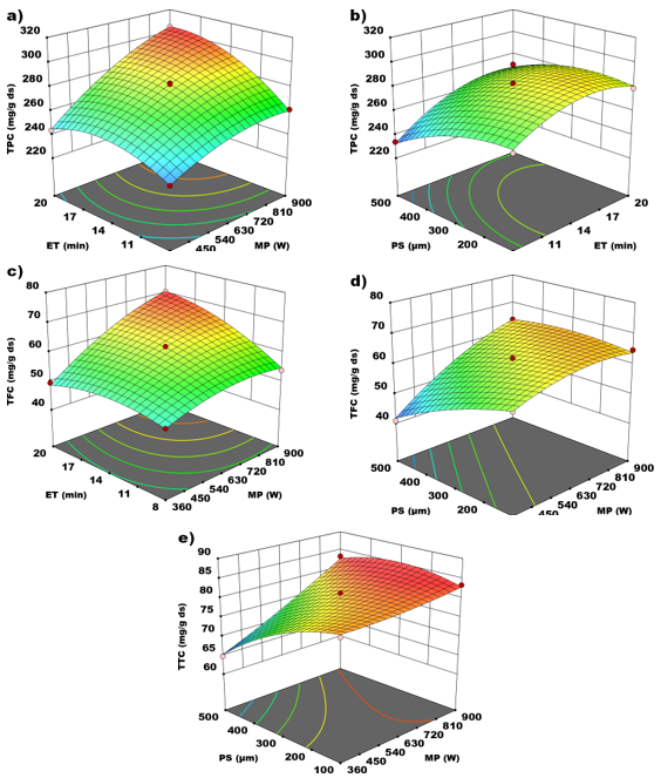
p < 0.05) indicates synergy, where longer residence time allows microwave induced disruption to translate into greater net transfer before curvature dominates, as reflected by the rising surface in
Figure 1a. The positive
interaction (
p < 0.05) indicates that extended time partly compensates for coarser particles by allowing diffusion to proceed further in larger fragments
| [27] | Aquino G, Basilicata MG, Crescenzi C, Vestuto V, Salviati E, Cerrato M, et al., Optimization of microwave-assisted extraction of antioxidant compounds from spring onion leaves using Box–Behnken design. Scientific Reports, 2023. 13(1): 14923. https://doi.org/10.1038/s41598-023-42303-x |
[27]
, as reflected by the response surface pattern in
Figure 1b. In contrast, the
interaction was not significant (
p > 0.05), suggesting that, within the tested window, the positive power effect on TPC is broadly retained across particle sizes (
Table 4).
3.2.2. Impact on Total Flavonoid Content
The quadratic model for TFC was highly significant (
p < 0.0001) and showed adequate fit, as supported by a non-significant lack of fit (
p > 0.05), low residual dispersion (SD of 0.99; CV of 1.72%), and strong adequacy metrics (adjusted R² of 0.98, predicted R² of 0.92, adequate precision of 35.54) (
Table 4). At the linear level, MP increased TFC (
p < 0.0001) and ET also increased TFC (
p < 0.001), while PS decreased TFC (
p < 0.0001) (
Table 4).
(a) TPC-Total phenolic content as function of MP-microwave power and ET-extraction time, (b) TPC-Total phenolic content as function of ET-extraction time and PS-particle size, (c) TFC-Total flavonoid content as function of MP-microwave power and ET-extraction time, (d) TFC-Total flavonoid content as function of MP-microwave power and PS-particle size, and (e) TTC-Total tannin content as function of MP-microwave power and PS-particle size.
Although flavonoids are included in the total phenolic pool, their response is often more constrained by localization and molecular architecture
| [28] | Xue Y, Le Bourvellec C, Renard CMGC, Zhao L, Wang K, Hu Z, et al., Food component interactions: a hitchhiker's guide. Food Innovation and Advances, 2025. 4(3): 304-20. https://doi.org/10.48130/fia-0025-0027 |
[28]
. Many phenolics occur as glycosides or esterified forms. They can also be compartmentalized or weakly associated with cell wall components. As a result, recovery depends on diffusion time and on the extent of microstructural disruption that opens access pathways and releases bound forms
| [29] | lvarez Viñas M, Sanz V, Rodríguez Seoane P, López Hortas L, Flórez Fernández N, Dolores Torres M, et al. Microwave-Assisted Extraction (MAE). Green Extraction Techniques in Food Analysis: Bentham Science Publishers; 2023. https://doi.org/10.2174/97898150494591230301 |
[29]
. The positive power effect therefore reflects the role of energy density in weakening physical barriers and improving solvent access to flavonoid rich domains
| [12] | Lee CS, Binner E, Winkworth-Smith C, John R, Gomes R, Robinson J. Enhancing natural product extraction and mass transfer using selective microwave heating. Chemical Engineering Science, 2016. 149: 97-103.
https://doi.org/10.1016/j.ces.2016.04.031 |
[12]
. In contrast, the negative PS effect indicates that larger particles increase intraparticle resistance, which restricts mass transfer and limits flavonoid release
| [30] | Chaves JO, de Souza MC, da Silva LC, Lachos-Perez D, Torres-Mayanga PC, Machado APdF, et al., Extraction of Flavonoids From Natural Sources Using Modern Techniques. Frontiers in Chemistry, 2020. Volume 8 - 2020.
https://doi.org/10.3389/fchem.2020.507887 |
[30]
. Furthermore, the significant negative quadratic terms for
,
, and
(all
p < 0.05) indicate pronounced curvature and earlier saturation of TFC relative to TPC (
Table 4). This behavior reflects a balance between improved release and increasing loss or conversion of structurally sensitive flavonoids as conditions become more severe
. Oxidation and heat driven rearrangements can lower the fraction that remains reactive in the colorimetric assay
. Interaction terms further differentiate the process controls.
and
were both positive and highly significant (both
p < 0.001), whereas
was not significant (
p > 0.05) (
Table 4). The MP × ET synergy implies that time is required for the structural changes induced by microwave exposure to result in cumulative solute migration
| [32] | Chan C-H, Yusoff R, Ngoh G-C. Assessment of Scale-Up Parameters of Microwave-Assisted Extraction via the Extraction of Flavonoids from Cocoa Leaves. Chemical Engineering & Technology, 2015. 38(3): 489-496.
https://doi.org/10.1002/ceat.201400459 |
[32]
, as illustrated in
Figure 1c. The significant MP × PS interaction indicates that the effect of power depends on particle size. Finer particles show a stronger response because shorter diffusion paths and smaller internal gradients allow released flavonoids to leave the matrix more readily
| [25] | Alsaud N, Farid M. Insight into the Influence of Grinding on the Extraction Efficiency of Selected Bioactive Compounds from Various Plant Leaves. Applied Sciences, 2020. 10(18): 6362. https://doi.org/10.3390/app10186362 |
[25]
, which is reflected by the response surface shape in
Figure 1d. In contrast, the non-significant ET × PS term suggests that extending time alone is insufficient to overcome particle size constraints for flavonoids
| [30] | Chaves JO, de Souza MC, da Silva LC, Lachos-Perez D, Torres-Mayanga PC, Machado APdF, et al., Extraction of Flavonoids From Natural Sources Using Modern Techniques. Frontiers in Chemistry, 2020. Volume 8 - 2020.
https://doi.org/10.3389/fchem.2020.507887 |
[30]
, which supports the interpretation that accessibility created by energy input is the dominant limiting step for this response within the studied range.
3.2.3. Impact on Total Tannin Content
The quadratic model for total tannin content was significant (
p < 0.001) and adequate across the design space, as indicated by a non-significant lack of fit (
p > 0.05), low error (SD of 1.11; CV of 1.47%), and satisfactory predictive statistics (adjusted R² of 0.97, predicted R² of 0.91, adequate precision of 19.41) (
Table 4). MP had a strong positive linear effect on TTC (
p < 0.0001) and ET also increased TTC (
p < 0.05), whereas PS decreased TTC (
p < 0.001) (
Table 4). This pattern is consistent with tannins being comparatively high molecular mass polyphenols with strong affinity for cell wall polysaccharides and proteins, so their release requires both effective matrix opening and sufficient time for desorption and diffusion
| [33] | Ben Aziz M, Moutaoikil M, Zeng L, mouhaddach A, Boudboud A, Hajji L, et al., Review on oenological tannins: conventional and emergent extraction techniques, and characterization. Journal of Food Measurement and Characterization, 2024. 18(6): 4528-4544.
https://doi.org/10.1007/s11694-024-02512-y |
[33]
. The negative PS effect again reflects longer internal pathways and reduced solvent access in coarser material
| [25] | Alsaud N, Farid M. Insight into the Influence of Grinding on the Extraction Efficiency of Selected Bioactive Compounds from Various Plant Leaves. Applied Sciences, 2020. 10(18): 6362. https://doi.org/10.3390/app10186362 |
| [34] | Pirozzi A, Donsì F. Impact of High-Pressure Homogenization on Enhancing the Extractability of Phytochemicals from Agri-Food Residues. Molecules, 2023. 28(15): 5657.
https://doi.org/10.3390/molecules28155657 |
[25, 34]
. Curvature, however, was not uniform across factors. The quadratic term for
was not significant (
p > 0.05), indicating an approximately linear power response within the tested range, whereas
(
p < 0.0001) and
(
p < 0.001) showed significant negative quadratic effects (
Table 4). These latter terms indicate reduced marginal gains at very long extraction times and at extreme powder fineness. This can be attributed to competing processes, including tannin self-association, renewed complexation with insoluble macromolecules, and oxidative coupling that decreases the extractable fraction
| [35] | Picariello L, Rinaldi A, Forino M, Errichiello F, Moio L, Gambuti A. Effect of Different Enological Tannins on Oxygen Consumption, Phenolic Compounds, Color and Astringency Evolution of Aglianico Wine. Molecules, 2020. 25(20): 4607. https://doi.org/10.3390/molecules25204607 |
| [36] | Tanaka T. Mechanisms underlying the dynamic changes in tannins associated with food processing and plant growth. Journal of Natural Medicines, 2025. 79(5): 967-985.
https://doi.org/10.1007/s11418-025-01925-3 |
[35, 36]
. Interaction effects were selective.
and
were not significant (both
p > 0.05), whereas
was positive and significant (
p < 0.05) (
Table 4). This
effect indicates that higher MP is particularly beneficial when PS is larger, since stronger internal heating improve solvent penetration and promotes micro fracturing that reduce intraparticle resistance in coarse fragments
| [12] | Lee CS, Binner E, Winkworth-Smith C, John R, Gomes R, Robinson J. Enhancing natural product extraction and mass transfer using selective microwave heating. Chemical Engineering Science, 2016. 149: 97-103.
https://doi.org/10.1016/j.ces.2016.04.031 |
| [37] | Chan C-H, Yeoh HK, Yusoff R, Ngoh GC. A first-principles model for plant cell rupture in microwave-assisted extraction of bioactive compounds. J Food Eng, 2016. 188: 98-107. https://doi.org/10.1016/j.jfoodeng.2016.05.017 |
[12, 37]
, as depicted by the response surface trend in
Figure 1e. For finer particles, accessibility is already high, so increasing power yields smaller incremental gains and curvature with respect to power remains weak.
3.2.4. Impact on DPPH Radical Scavenging Activity
The quadratic model for DPPH was highly significant (
p < 0.0001) with a non-significant lack of fit (
p >0.05), indicating satisfactory representation of the response within the tested factor space (
Table 4).
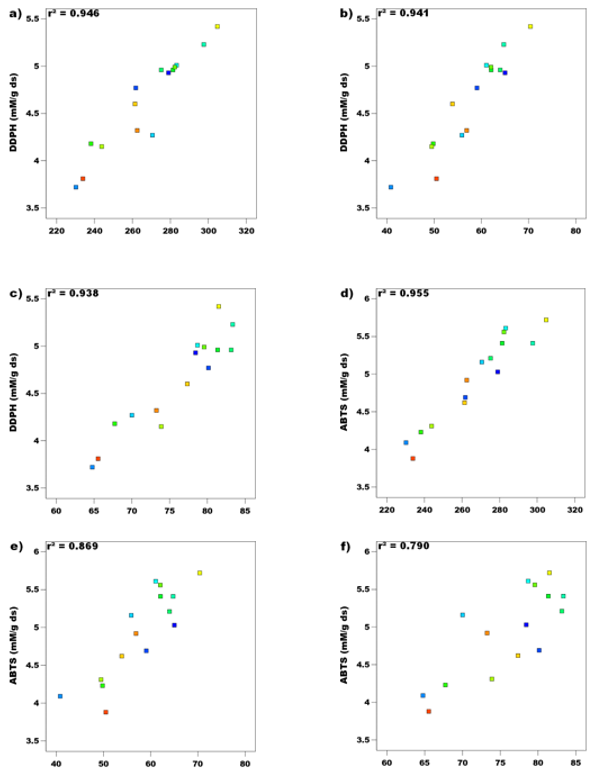
(a) DPPH-1,1 diphenyl 2 picrylhydrazyl vs TPC-Total phenolic content, (b) DPPH-1,1 diphenyl 2 picrylhydrazyl vs TFC-Total flavonoid content, (c) DPPH-1,1 diphenyl 2 picrylhydrazyl vs TTC-Total tannin content, (d) ABTS-2,2 azino bis (3 ethylbenzothiazoline 6 sulfonic acid) vs TPC-Total phenolic content, (e) ABTS-2,2 azino bis (3 ethylbenzothiazoline 6 sulfonic acid) vs TFC-Total flavonoid content, and (f) ABTS-2,2 azino bis (3 ethylbenzothiazoline 6 sulfonic acid) vs TTC-Total tannin content.
Model dispersion was low, with SD of 0.05 and CV of 1.14%, and adequacy statistics were strong, with adjusted R² of 0.99, predicted R² of 0.95, and adequate precision of 39.88, supporting reliable interpretation of factor effects. Across the design space, DPPH was closely aligned with the phytochemical indices, showing strong relationships with TPC (r² = 0.946,
Figure 2a), TFC (r² = 0.941,
Figure 2b), and TTC (r² = 0.938,
Figure 2c). These high r² values indicate that most of variation in DPPH can be attributable to changes in the extracted phenolic, flavonoid, and tannin pools
| [38] | Gu C, Howell K, Dunshea FR, Suleria HAR. LC-ESI-QTOF/MS Characterisation of Phenolic Acids and Flavonoids in Polyphenol-Rich Fruits and Vegetables and Their Potential Antioxidant Activities. Antioxidants, 2019. 8(9): 405. https://doi.org/10.3390/antiox8090405 |
| [39] | Yu M, Gouvinhas I, Rocha J, Barros AIRNA. Phytochemical and antioxidant analysis of medicinal and food plants towards bioactive food and pharmaceutical resources. Scientific Reports, 2021. 11(1): 10041.
https://doi.org/10.1038/s41598-021-89437-4 |
[38, 39]
, highlighting that factor effects act mainly through phytochemical enrichment and preservation of redox-active structures
| [40] | Michalaki A, Grintzalis K. A Multiparametric Protocol for the Detailed Phytochemical and Antioxidant Characterisation of Plant Extracts. Methods and Protocols, 2023. 6(2): 40.
https://doi.org/10.3390/mps6020040 |
[40]
. All three linear terms were significant (
Table 4), with MP (CE 0.42,
p < 0.0001) and ET (CE 0.23,
p < 0.0001) increasing DPPH, whereas PS (CE −0.31, p < 0.0001) decreased it. These trends indicate that higher power and longer extraction promote accumulation of phytochemicals contributing to DPPH, whereas larger particles restrict recovery due to diffusion limitations
| [41] | Dreisewerd B, Merz J, Schembecker G. Determining the solute–solid interactions in phytoextraction. Chemical Engineering Science, 2015. 134: 287-296.
https://doi.org/10.1016/j.ces.2015.04.025 |
| [42] | Lomovskiy I, Makeeva L, Podgorbunskikh E, Lomovsky O. The Influence of Particle Size and Crystallinity of Plant Materials on the Diffusion Constant for Model Extraction. Processes, 2020. 8(11): 1348.
https://doi.org/10.3390/pr8111348 |
[41, 42]
. Interaction effects further highlight how variable combinations impact DPPH. Both
(CE = 0.21,
p < 0.001) and
(CE = 0.20, p =
p < 0.001) were significant, while
was not (
p > 0.05) (
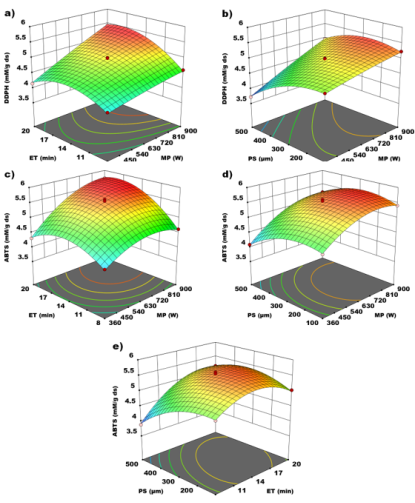
Table 4). The MP × ET interaction, illustrated in
Figure 3a, shows that longer ET amplifies the effect of MP by allowing cumulative release and accumulation of DPPH-active solutes. The MP × PS interaction in
Figure 3b, indicates that smaller particles increase the microwave response by reducing internal resistance and increasing exposure of antioxidant-rich domains, supporting greater transfer of the phytochemical pool
| [12] | Lee CS, Binner E, Winkworth-Smith C, John R, Gomes R, Robinson J. Enhancing natural product extraction and mass transfer using selective microwave heating. Chemical Engineering Science, 2016. 149: 97-103.
https://doi.org/10.1016/j.ces.2016.04.031 |
| [25] | Alsaud N, Farid M. Insight into the Influence of Grinding on the Extraction Efficiency of Selected Bioactive Compounds from Various Plant Leaves. Applied Sciences, 2020. 10(18): 6362. https://doi.org/10.3390/app10186362 |
| [37] | Chan C-H, Yeoh HK, Yusoff R, Ngoh GC. A first-principles model for plant cell rupture in microwave-assisted extraction of bioactive compounds. J Food Eng, 2016. 188: 98-107. https://doi.org/10.1016/j.jfoodeng.2016.05.017 |
[12, 25, 37]
. Curvature was dominated by significant negative quadratic effects of
(CE −0.37,
p < 0.0001) and
(CE −0.29,
p < 0.001), whereas
was not significant (
p > 0.05) (
Table 4). This suggests that the effect of MP increases across the range, but longer ET and smaller PS reach saturation
, reflecting exhaustion of the easily extractable fraction, so each increment adds less DPPH-active phytochemical
| [43] | Yan L, Zhang Y, Yan H, Fan Y, Liu X, Ma C, et al., Molecular Characterization of Soluble Components in the Lignite by Sequential Solvent Extraction via Continuously Reducing Particle Size. ACS Omega, 2020. 5(19): 11075-1183.
https://doi.org/10.1021/acsomega.0c00952 |
[43]
.
3.2.5. Impact on ABTS Radical Cation Scavenging Activity
The quadratic model for ABTS was highly significant (
p < 0.0001) with a non-significant lack of fit (
p > 0.05), confirming adequate model structure (
Table 4). Residual variation remained low (SD = 0.08, CV = 1.54%), and model adequacy statistics indicated strong explanatory and predictive performance (R² = 0.98, predicted R² = 0.97, and adequate precision = 29.50). The ABTS response displayed a differentiated attribution pattern (
Figure 2), with very strong correlation to TPC (
Figure 2d, r² = 0.955), weaker correlation with TFC (
Figure 2e, r² = 0.869), and the weakest with TTC (
Figure 2f, r² = 0.790). This suggests that ABTS is primarily driven by total phenolics, while flavonoids contribute partially and tannins account for a smaller fraction, supporting the view that ABTS changes mainly reflect conditions that enrich or deplete TPC
| [44] | Costantini M, Summo C, Centrone M, Rybicka I, D’Agostino M, Annicchiarico P, et al., Macro- and Micro-Nutrient Composition and Antioxidant Activity of Chickpea and Pea Accessions. Polish Journal of Food and Nutrition Sciences, 2021. 71(2): 177-185. https://doi.org/10.31883/pjfns/135813 |
[44]
. All linear effects were significant (
Table 4), with ABTS increasing under higher MP (CE = 0.46,
p < 0.0001) and longer ET (CE = 0.32,
p < 0.0001), and decreasing with larger PS (CE = −0.21,
p < 0.001). As stated above the ABTS tracks TPC most closely (
Figure 2d), and the positive MP and ET effects reflect net enrichment of the phenolic pool, while coarser particles limit its transfer to the liquid phase
| [45] | Gil-Martín E, Forbes-Hernández T, Romero A, Cianciosi D, Giampieri F, Battino M. Influence of the extraction method on the recovery of bioactive phenolic compounds from food industry by-products. Food Chem, 2022. 378: 131918.
https://doi.org/10.1016/j.foodchem.2021.131918 |
[45]
. Interaction behavior was more developed for ABTS than for DPPH.
was significant and positive (CE 0.26,
p < 0.05),
was also significant (CE 0.10,
p < 0.05), and
was strongly positive (CE 0.29,
p < 0.001) (
Table 4). These interactions indicate that ABTS benefits most when MP and ET are increased together, and when diffusion constraints from PS are offset either by finer particles or longer ET
| [46] | Jovanović A, Skrt M, Petrović P, Janković-Častvan I, Zdunić G, Šavikin K, et al., Ethanol Thymus serpyllum extracts: Evaluation of extraction conditions via total polyphenol content and radical scavenging activity. Lekovite sirovine, 2019. 39: 23-9. https://doi.org/10.5937/leksir1939023J |
[46]
. The response surfaces in
Figure 3c and 3d highlight these dependencies, showing that longer ET can partly compensate for larger PS, consistent with time-dependent enrichment of soluble phenolics
| [47] | Hitayezu E, Kang Y-H. Effect of particle size on the physicochemical and morphological properties of Hypsizygus marmoreus mushroom powder and its hot-water extracts. Korean Journal of Food Preservation, 2021. 28(4): 504-549. https://doi.org/10.11002/kjfp.2021.28.4.540 |
[47]
. All quadratic terms for ABTS were negative and significant, with
(CE −0.35,
p < 0.001),
(CE −0.45,
p < 0.0001), and
(CE −0.32,
p < 0.001) (
Table 4), confirming pronounced curvature and indicates an interior optimum. Given the strong ABTS–TPC relationship in
Figure 2d, this curvature indicates that at higher severity the marginal contribution of newly extracted phenolics to ABTS quenching decreases
| [46] | Jovanović A, Skrt M, Petrović P, Janković-Častvan I, Zdunić G, Šavikin K, et al., Ethanol Thymus serpyllum extracts: Evaluation of extraction conditions via total polyphenol content and radical scavenging activity. Lekovite sirovine, 2019. 39: 23-9. https://doi.org/10.5937/leksir1939023J |
[46]
, while a larger fraction of the phenolic pool shifts toward less reactive forms
| [48] | Ling JKU, Sam JH, Jeevanandam J, Chan YS, Nandong J. Thermal Degradation of Antioxidant Compounds: Effects of Parameters, Thermal Degradation Kinetics, and Formulation Strategies. Food and Bioprocess Technology, 2022. 15(9): 1919-1935. https://doi.org/10.1007/s11947-022-02797-1 |
[48]
, which together reduce incremental gains despite continued extraction
| [49] | Hobbi P, Okoro OV, Delporte C, Alimoradi H, Podstawczyk D, Nie L, et al., Kinetic modelling of the solid–liquid extraction process of polyphenolic compounds from apple pomace: influence of solvent composition and temperature. Bioresources and Bioprocessing, 2021. 8(1): 114.
https://doi.org/10.1186/s40643-021-00465-4 |
[49]
.
(a) DPPH-1,1 diphenyl 2 picrylhydrazyl as function of MP-microwave power and of ET-extraction time, (a) DPPH-1,1 diphenyl 2 picrylhydrazyl as function of MP-microwave power and PS-particle size, (c) ABTS-2,2 azino bis (3 ethylbenzothiazoline 6 sulfonic acid) as function of MP-microwave power and ET-extraction time,(d) ABTS-2,2 azino bis (3 ethylbenzothiazoline 6 sulfonic acid) as function of MP-microwave power and PS-particle size, and ABTS-2,2 azino bis (3 ethylbenzothiazoline 6 sulfonic acid) as function of ET-extraction time and PS-particle size.
3.3. Optimal MAAE Conditions for Syzygium cumini Phytochemicals and Antioxidants
Desirability-based optimization was performed by prioritizing TPC, TFC, and antioxidant activities (DPPH and ABTS) with the highest importance, while TTC was assigned moderate importance to balance bioactivity with potential antinutritional effects
| [50] | Boateng ID. Application of Graphical Optimization, Desirability, and Multiple Response Functions in the Extraction of Food Bioactive Compounds. Food Engineering Reviews, 2023. 15(2): 309-328.
https://doi.org/10.1007/s12393-023-09339-1 |
| [51] | Manzanilla-Valdez ML, Ma Z, Mondor M, Hernández-Álvarez AJ. Decoding the Duality of Antinutrients: Assessing the Impact of Protein Extraction Methods on Plant-Based Protein Sources. Journal of Agricultural and Food Chemistry, 2024. 72(22): 12319-12339.
https://doi.org/10.1021/acs.jafc.4c00380 |
[50, 51]
. The model predicted optimum conditions at MP 900 W, ET 18.94 min, and PS 276.54 µm, with predicted responses of TPC 305.44 mg GAE/g ds, TFC 70.12 mg RE/g ds, TTC 83.35 mg TAE/g ds, DPPH 5.51 mM TE/g ds, and ABTS 5.78 mM TE/g ds. For practical validation, ET and PS were rounded to 20 min and 273 µm, respectively, while maintaining MP at 900 W, in accordance with equipment setting resolution. Experimental results closely matched the predicted values, and at the 95% confidence level the experimental means fell within the model prediction intervals, confirming the accuracy of the quadratic model. The measured TPC, TFC, and TTC were 305.55 ± 0.07 mg GAE/g ds, 70.54 ± 0.05 mg RE/g ds, and 81.99 ± 0.03 mg TAE/g ds, respectively, while DPPH and ABTS reached 5.47 ± 0.03 mM TE/g ds and 5.74 ± 0.04 mM TE/g ds. These results indicate that the optimized conditions significantly improve both extractable phytochemical content and antioxidant capacity, thereby supporting the predictive reliability of the model. Overall, the selected operating window provides high phytochemical yield and strong antioxidant activity, thereby confirming the robustness of the optimization outcome. From an engineering standpoint, the optimum reflects a combination of high MP, moderate ET, and intermediate PS. High power ensures rapid volumetric heating and efficient matrix disruption, while the moderate extraction time allows sufficient diffusion of solubilized compounds without excessive thermal degradation
| [37] | Chan C-H, Yeoh HK, Yusoff R, Ngoh GC. A first-principles model for plant cell rupture in microwave-assisted extraction of bioactive compounds. J Food Eng, 2016. 188: 98-107. https://doi.org/10.1016/j.jfoodeng.2016.05.017 |
| [46] | Jovanović A, Skrt M, Petrović P, Janković-Častvan I, Zdunić G, Šavikin K, et al., Ethanol Thymus serpyllum extracts: Evaluation of extraction conditions via total polyphenol content and radical scavenging activity. Lekovite sirovine, 2019. 39: 23-9. https://doi.org/10.5937/leksir1939023J |
[37, 46]
. The intermediate PS increases the exposed surface area compared with coarser particles but avoids overly fine powders that could compact and hinder solvent penetration
| [25] | Alsaud N, Farid M. Insight into the Influence of Grinding on the Extraction Efficiency of Selected Bioactive Compounds from Various Plant Leaves. Applied Sciences, 2020. 10(18): 6362. https://doi.org/10.3390/app10186362 |
| [52] | Nagy B, Simándi B, Dezső András C. Characterization of packed beds of plant materials processed by supercritical fluid extraction. J Food Eng, 2008. 88(1): 104-113.
https://doi.org/10.1016/j.jfoodeng.2008.01.019 |
[25, 52]
. Taken together, these conditions favor maximal recovery of bioactive compounds while preserving their redox-active properties, in agreement with the observed TPC–TFC–antioxidant trends.